

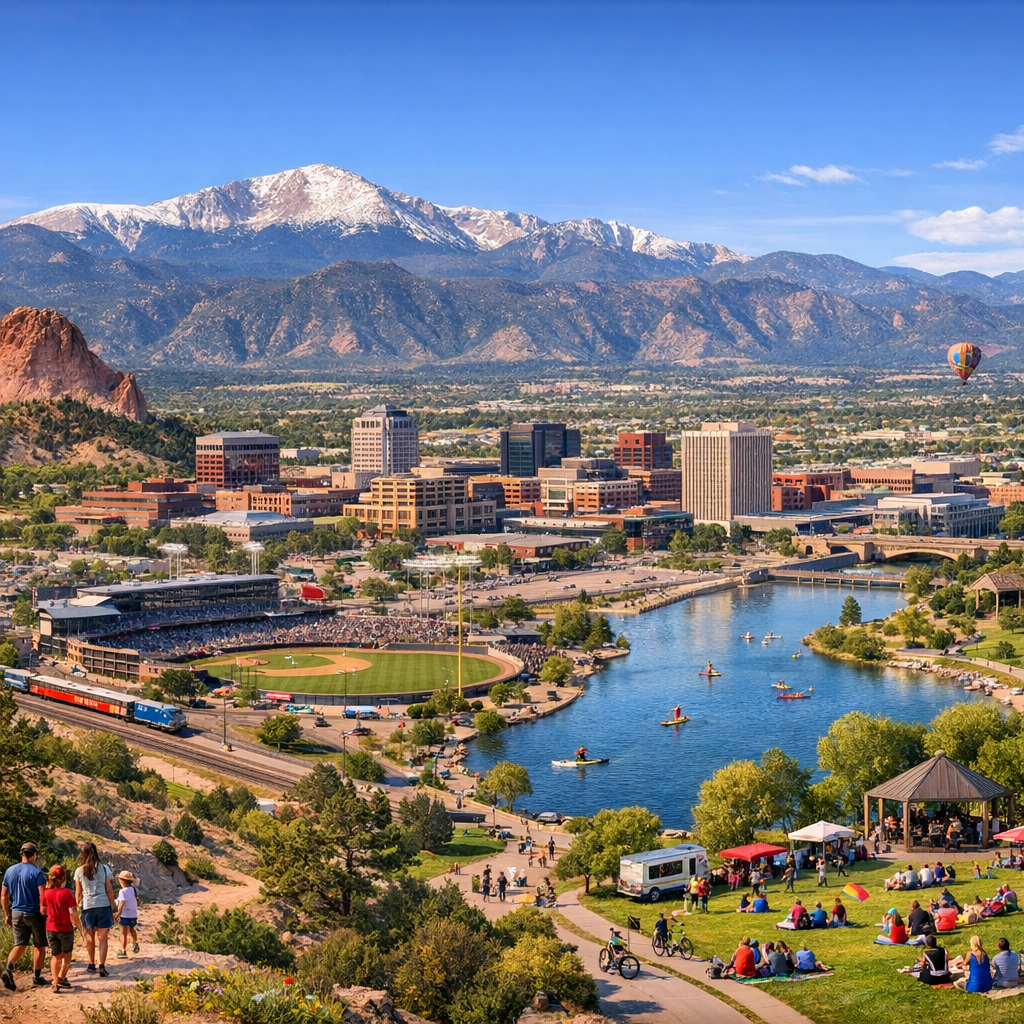
As national dynamics evolve, Colorado Springs finds itself at the intersection of broader economic trends, population shifts, and policy changes. Understanding these influences is crucial for residents and policymakers alike.
Economic Vitality Amidst National Shifts
Colorado Springs has demonstrated resilience in the face of national economic fluctuations. The city achieved its highest-ever ranking at No. 5 among large metro areas in the 2025 Best-Performing Cities index by the Milken Institute. This recognition highlights balanced performance across job and wage growth, a robust high-tech sector, and ample economic opportunities. Such achievements underscore the city’s ability to adapt and thrive despite broader economic challenges.
Population Growth and Migration Patterns
Recent U.S. Census data indicates a slowdown in population growth for El Paso County, with a notable decline in international migration. Between 2024 and 2025, the county added 4,700 residents, reflecting a broader national trend where U.S. population growth decreased from 1% to 0.5%. This shift is largely attributed to a 55% drop in international migration. Despite this, Colorado continues to experience strong natural growth and net migration, particularly in Front Range counties.
Community Initiatives and Infrastructure Developments
In response to national educational priorities, Colorado Governor Jared Polis celebrated the delivery of 3 million free books to children across the state, emphasizing early childhood literacy. This initiative, highlighted during a visit to Colorado Springs, is part of the state’s ongoing investment in early education, including universal pre-K and monthly book distributions to children from birth to age five.
On the infrastructure front, the U.S. Air Force Academy is set to unveil its new Hosmer Visitor Center, marking the completion of the City for Champions initiative. This decade-long economic development project aims to enhance tourism and economic growth in the area, reflecting the city’s commitment to modernization and community engagement.
Environmental Concerns and Preparedness
Following an unusually dry and warm winter, Colorado Springs faces a heightened wildfire risk, particularly in residential areas bordering wooded regions. City and fire officials are ramping up mitigation efforts, including removing dead vegetation in areas like Blodgett Open Space and Cheyenne Mountain State Park. Despite recent rainfall, the state’s drought report indicates that all of Colorado remains in at least moderate drought, underscoring the ongoing risk and the importance of community preparedness.
In summary, Colorado Springs continues to navigate the impacts of national trends through proactive economic strategies, community-focused initiatives, and environmental preparedness. Staying informed and engaged with these developments is essential for fostering a resilient and thriving community.